
5 Ways to Add Sustainability to Your Flower Shop
The Cheapest & Most Versatile Ways to Go Foam-Free
1. Chicken Wire: The Classic Foam-Free Staple
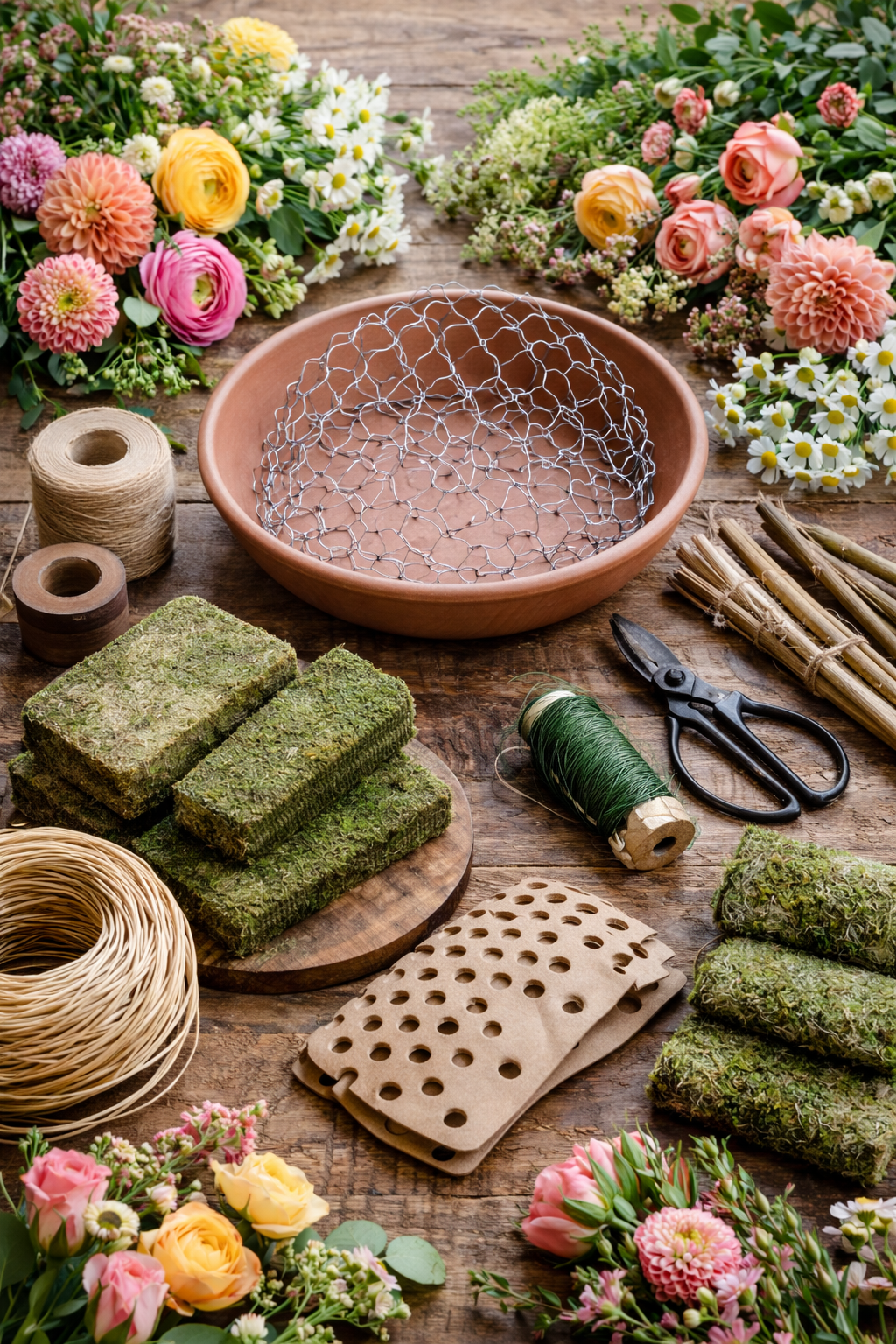
Chicken wire is one of the cheapest and most versatile mechanics you can use for foam-free floral design. It can be shaped to fit any size or structure, making it ideal for everything from compotes to large installations.
To create a sturdy base, scrunch the chicken wire into a loose ball and nest it inside your vessel. Sometimes I’ll add a pin frog at the bottom for extra stability, especially for heavier stems or more precise designs.
Why it works:
Extremely affordable
Fully reusable when sanitized
Customizable for any vessel or design style
Pro tip: There are now coated chicken wire options made specifically for florals that won’t rust, extending their lifespan even further.
2. Grape Vine & Other Organic Materials
Grape vine and other natural vines can be used in place of chicken wire to achieve a similar effect. They create organic structure and movement while holding stems in place beautifully.
Unlike metal mechanics, these materials are fully compostable, making them an excellent choice for studios that prioritize closed-loop sustainability.
Why it works:
Compostable and eco-friendly
Adds natural texture and interest
Great for garden-style arrangements
This is a wonderful option when you want your mechanics to align visually and ethically with your design philosophy.
3. Agrawool / Osha Pouch
Agrawool (often used in Osha pouches) is a compostable foam alternative designed to replace traditional Oasis floral foam. It absorbs water well and supports stems while breaking down naturally after use.
Sometimes, I’ll pair Agrawool with chicken wire around the outside to give extra structure—especially in larger arrangements.
Why it works:
Compostable and eco-friendly
Familiar feel for designers transitioning from foam
Ideal for event work when composting is available
This option is a great bridge for florists moving away from foam while still wanting a similar workflow.
4. Holly Chapel Design Pillows
Holly Chapel Design pillows are beautifully made and thoughtfully designed, but they do come with a higher price point. Because of this, they’re best used in-house rather than given away or sold with arrangements.
It’s important to note that these pillows are size-specific—a 4-inch pillow only works with a 4-inch vase opening, which limits flexibility.
Why it works (with caveats):
High quality and reusable
Clean, professional mechanics
Best for studio use only
Think of these as an investment tool rather than an everyday mechanic.
5. Pin Frogs: Small but Mighty
Pin frogs are a timeless and incredibly effective foam alternative. They come in both straight pin and hairpin styles, allowing for different stem thicknesses and design needs.
To use them securely, attach the pin frog to the bottom of your vase using an adhesive like sticky tack.
Why it works:
Long-lasting and reusable
Excellent for precise stem placement
Minimal waste, maximum control
Pin frogs are perfect for compotes, ikebana-inspired designs, and modern arrangements.
Final Thoughts
Going foam-free doesn’t mean sacrificing creativity, stability, or profitability. By incorporating reusable and compostable mechanics like chicken wire, organic vines, pin frogs, and sustainable alternatives, you can significantly reduce waste while elevating your design work.
Sustainable floristry starts with small, intentional changes—and these mechanics prove that eco-friendly choices can also be the most practical ones.
Sustainability in floristry doesn’t have to be complicated or expensive. One of the biggest impacts you can make in your flower shop is eliminating floral foam and replacing it with reusable or compostable mechanics. Foam-free design not only reduces waste—it also encourages more intentional, creative floral work.
Here are five practical, budget-friendly ways to add sustainability to your flower shop, starting with some of the most accessible foam alternatives available.
Sustainable floristry starts with small, intentional changes—and these mechanics prove that eco-friendly choices can also be the most practical ones.
✳︎
Sustainable floristry starts with small, intentional changes—and these mechanics prove that eco-friendly choices can also be the most practical ones. ✳︎
Next:
What is Sustainable floristry→
Every arrangement is an opportunity to make a difference.
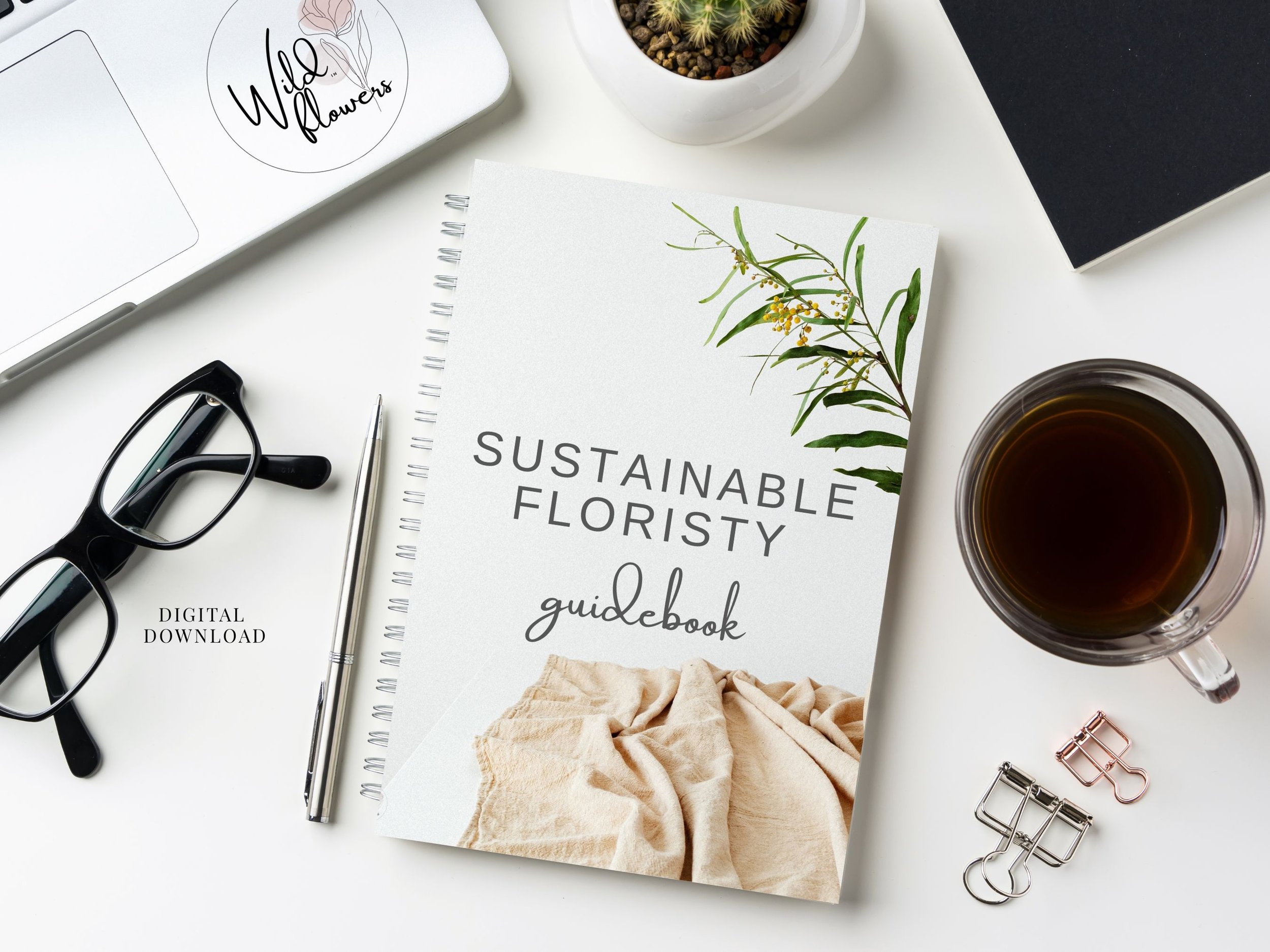
Create Beautiful Arrangements—Without Harming the Planet.
This Sustainable Floristry Guide is a practical, inspiring resource for florists, floral designers, and flower lovers who want to reduce their environmental impact while still creating stunning, intentional designs.
Inside this guide, you’ll learn what sustainable floristry truly means, why foam-free mechanics matter, and how small shifts in your everyday practices can make a big difference. From alternative design mechanics and eco-friendly materials to waste reduction and mindful sourcing, this guide offers approachable strategies you can start using right away—no perfection required.
Whether you’re a professional florist, a student, or a hobbyist, this guide will help you align your floral practice with your values while maintaining creativity, quality, and beauty.
***Proceeds directly fund the growth and distribution of sustainably grown flowers in New Jersey.***
What You’ll Find Inside:
A clear explanation of sustainable floristry
Why floral foam is harmful (and what to use instead)
Foam-free mechanics and design alternatives
Waste-reduction strategies for your studio or shop
Eco-friendly packaging and supply tips
Simple ways to source more responsibly
Perfect For:
Florists & floral designers
Flower farmers
Students & educators
Eco-conscious creatives
Format: Digital Download (PDF)
Use: Personal & educational use
Start building a floral practice that honors the earth, your health, and your creativity.
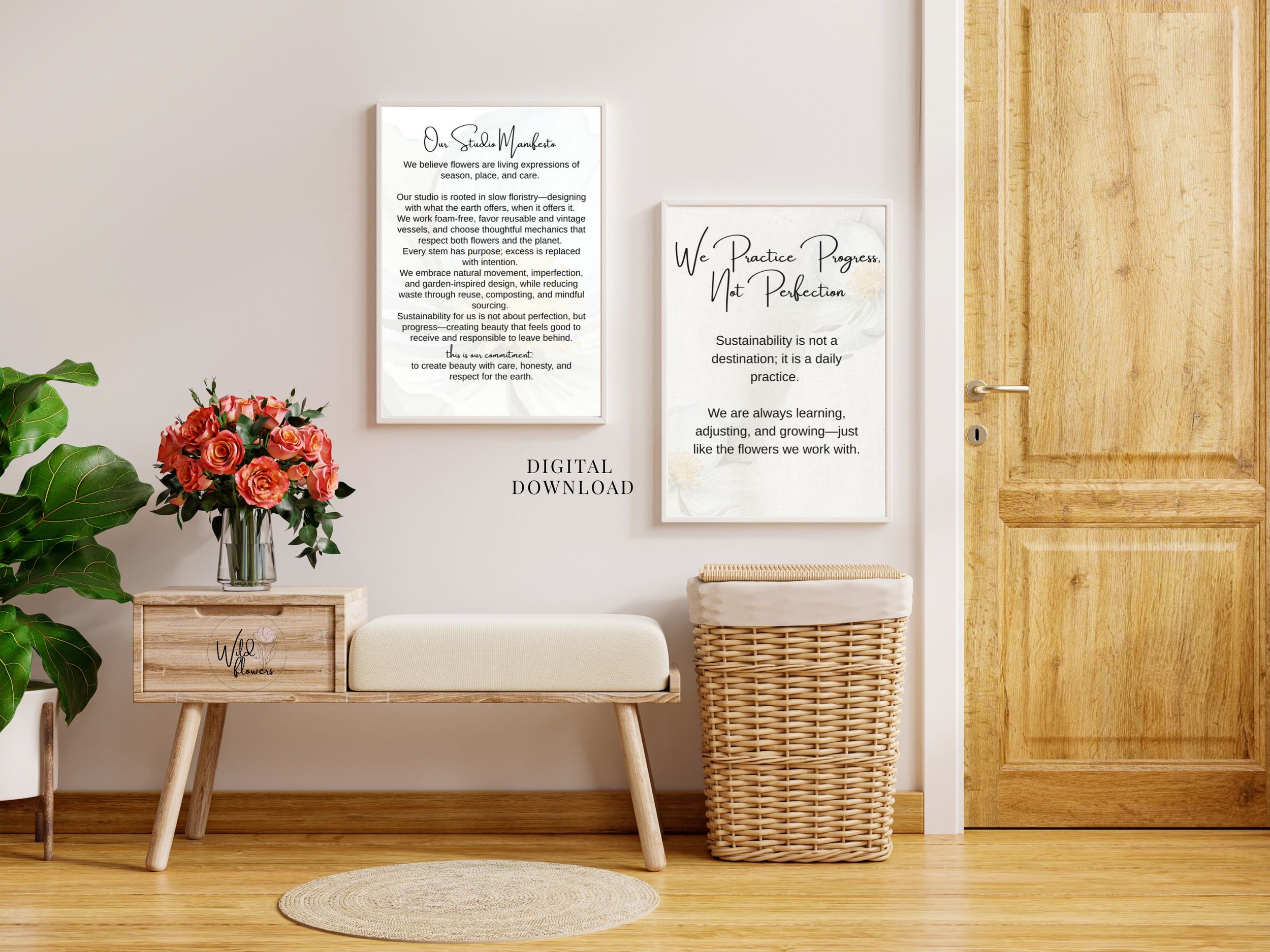
A Declaration for Earth-Honoring Floral Design.
The Sustainable Floristry Manifesto is an inspiring, values-led guide for florists, floral designers, and flower lovers who believe beauty should never come at the expense of the planet.
This manifesto is not about perfection—it’s about intention. It offers a clear set of guiding principles to help you align your floral practice with sustainability, mindfulness, and respect for natural resources. Use it as a daily reminder, a studio touchstone, or a personal commitment to creating with care.
Whether you are just beginning your sustainability journey or deepening an existing practice, this manifesto invites you to slow down, think critically, and choose better—one stem at a time.
***Proceeds directly fund the growth and distribution of sustainably grown flowers in New Jersey.***
Inside You’ll Find:
Core principles of sustainable floristry
A values-based approach to foam-free design
Commitments to waste reduction and reuse
Mindful sourcing and material choices
Honoring seasonality and local ecosystems
Creating beauty with purpose and responsibility
Perfect For:
Florists & floral designers
Flower farmers
Students & educators
Eco-conscious creatives
Format: Multiple Sized JPEG
Use: Personal & educational use
Create flowers with intention.
Design with respect.
Lead with sustainability.
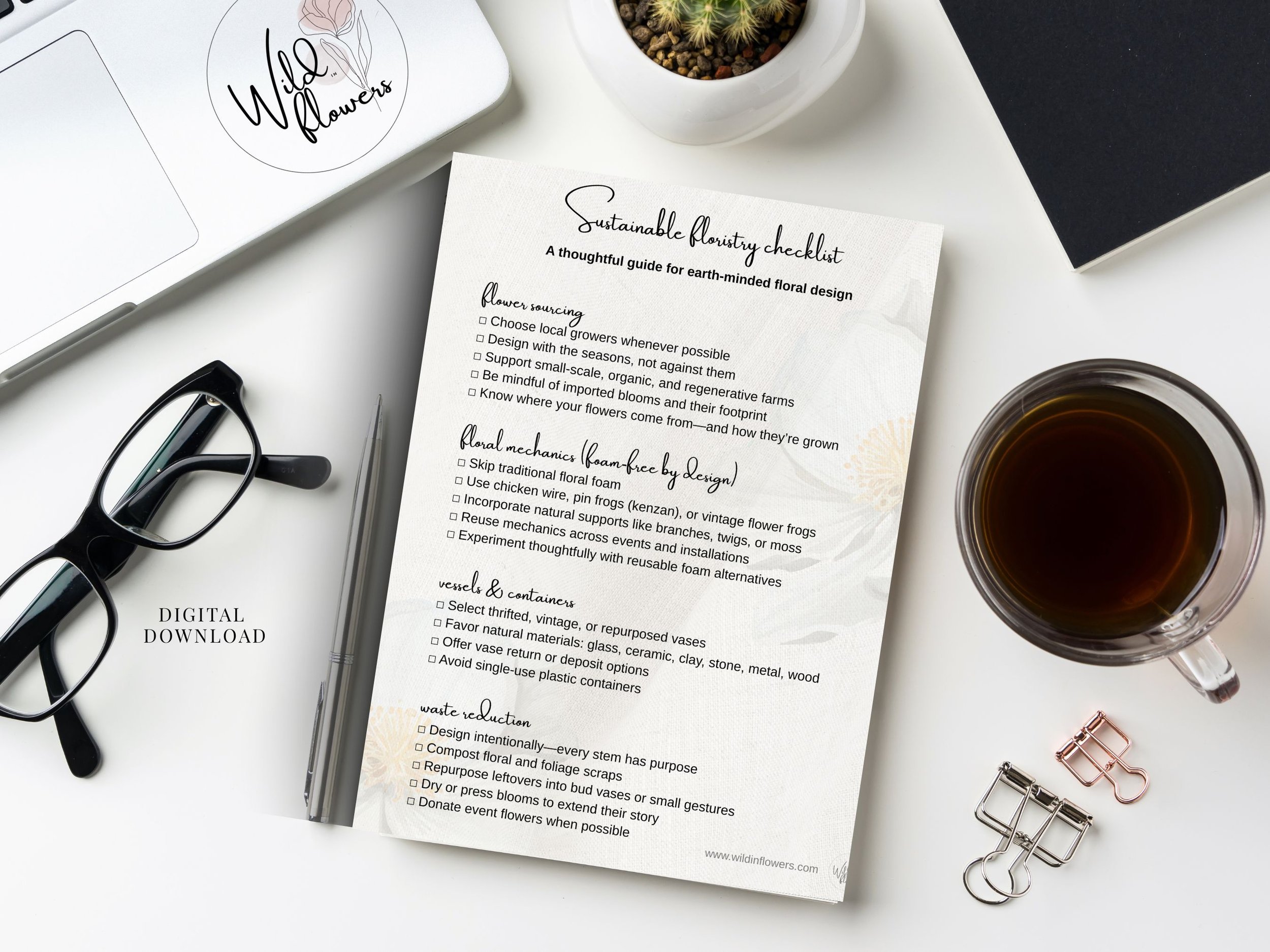
Create Beautiful Arrangements—Without Harming the Planet.
This Sustainable Floristry Checklist Guide is a practical, easy-to-use resource for florists, floral designers, and flower lovers who want to reduce their environmental impact while still creating stunning, intentional designs.
Instead of long theory-heavy explanations, this guide is organized into simple, actionable checklists you can reference in your studio, shop, or classroom. Each section breaks sustainable practices into manageable steps—making it easier to adopt eco-friendly habits without feeling overwhelmed.
Whether you’re just beginning your sustainability journey or looking to refine your existing practices, this checklist-style guide helps you make thoughtful, planet-conscious choices with confidence.
***Proceeds directly fund the growth and distribution of sustainably grown flowers in New Jersey.***
What’s Included:
✔️ Sustainable floristry fundamentals checklist
✔️ Foam-free mechanics & design alternatives checklist
✔️ Waste-reduction & composting checklist
✔️ Responsible sourcing checklist
✔️ Eco-friendly packaging & supply swaps checklist
✔️ Studio & workflow sustainability habits checklist
Perfect For:
Florists & floral designers
Flower farmers
Students & educators
Eco-conscious creatives
Format: Digital Download (PDF)
Use: Personal & educational use
Build a floral practice that supports the planet—one simple check at a time.
If you're interested in working with us, complete the form with a few details. We'll review your message and get back to you within 48 hours.